
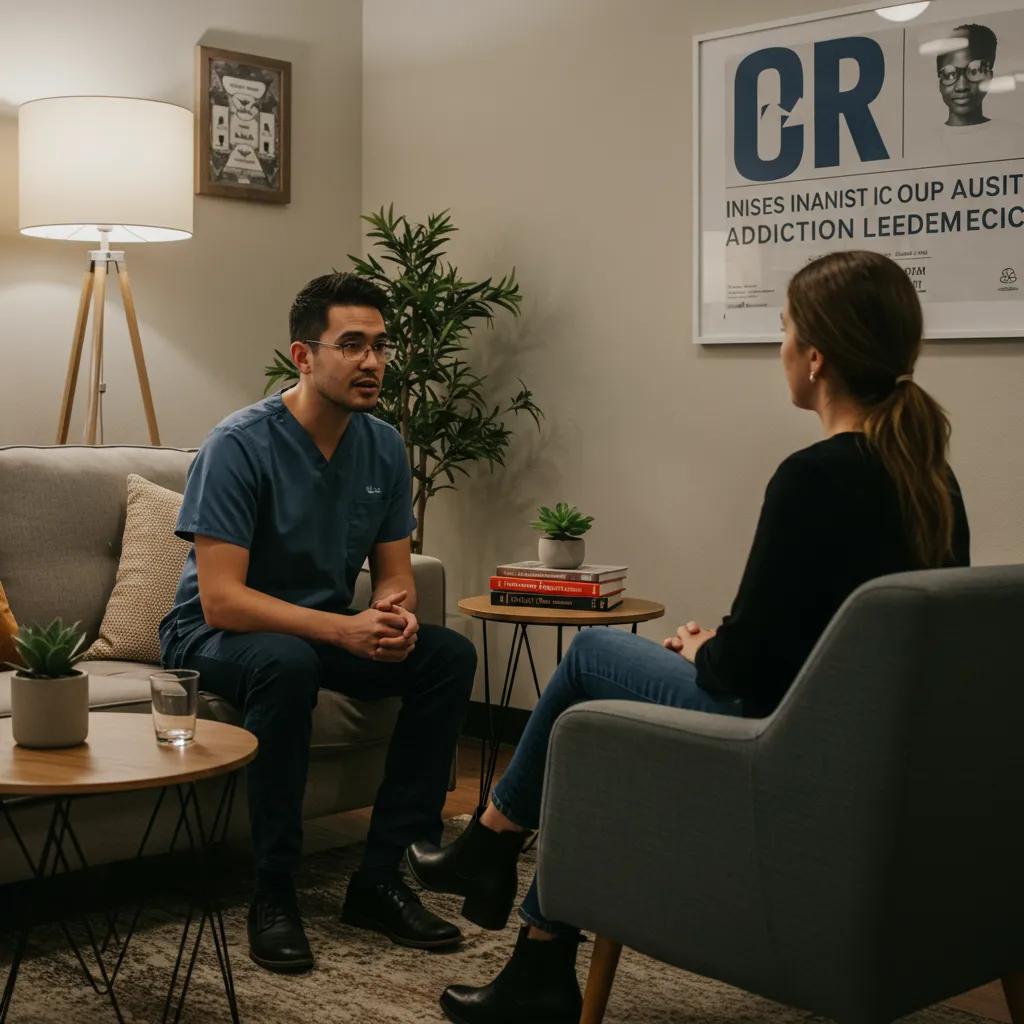

Addiction Counselor: Role, Credentials, and What to Expect for Your Recovery Journey
Addiction counselors are behavioral health professionals who assess, guide, and treat people with substance use disorders and related mental health concerns. Understanding the addiction counselor role, the credentials that validate their training, and what to expect during treatment helps people and families make informed choices about recovery.
This article explains core responsibilities, education and licensure pathways, the patient experience from intake through aftercare, how counselors address co-occurring disorders, career outlook and salary trends, and practical tips for finding the right counselor. Readers will learn the typical assessment steps, evidence-based therapies counselors use, credential acronyms you may encounter, and questions to ask when choosing a provider. Throughout, the content emphasizes patient-centered expectations and practical guidance so you can use this information to evaluate care options and, when ready, contact a treatment provider for admission.
What Does an Addiction Counselor Do? Key Roles and Daily Responsibilities
An addiction counselor is a counseling professional who evaluates substance use disorder severity, develops individualized treatment plans, and delivers psychotherapy to support recovery. This role combines clinical assessment, evidence-based therapy delivery, case management, and coordination with medical providers so that behavioral and medical needs are addressed together.
In daily practice counselors use therapeutic approaches such as cognitive behavioral therapy (CBT), motivational interviewing (MI), and group therapy to reduce substance use and build relapse prevention skills. The practical result for patients is structured support, practical coping strategies, and connections to medication-assisted treatment or psychiatric care when needed, which helps stabilize recovery and improve functioning.
What Are the Main Duties of an Addiction Counselor?
Main duties of an addiction counselor include intake assessment, treatment planning, individual and group therapy, documentation, and crisis intervention to ensure safety and progress. During assessment the counselor gathers substance use history, screens for co-occurring disorders, and identifies immediate risks so treatment targets are prioritized effectively. Treatment planning turns assessment data into measurable goals and scheduled interventions, while documentation ensures continuity of care and legal/ethical compliance. Crisis intervention may involve safety planning, referral for medical stabilization, or urgent coordination with higher-level services, which leads naturally into how therapists apply specific modalities in sessions.
- Intake assessments are used to determine diagnosis, risk, and initial goals.
- Individual therapy focuses on skill-building and relapse prevention.
- Group therapy provides peer support and skill practice in a communal setting.
These duties create a coordinated recovery pathway that helps people move from stabilization to sustained recovery, and the next section describes how counselors support change during therapy.
How Do Addiction Counselors Support Patients Through Therapy?
Counselors support patients through therapy by applying evidence-based techniques that change behavior, strengthen motivation, and reduce relapse triggers. They may use CBT to reframe thinking patterns that lead to substance use, MI to enhance readiness for change, and DBT skills to manage strong emotions; each approach targets mechanisms that drive substance-related behavior.
Sessions include goal setting, skills training (e.g., coping, communication), and regular progress monitoring to adjust the plan as needed, and counselors document outcomes to inform multidisciplinary care. Group therapy reinforces skills through peer feedback and shared experience, while individualized therapy tailors interventions to personal history and co-occurring conditions, preparing patients for transitions to aftercare and community supports.
What Are the Education and Credential Requirements to Become an Addiction Counselor?

Becoming an addiction counselor typically requires a degree in a behavioral health field, supervised clinical hours, and state or national certification or licensure that verifies competency and public protection. Education pathways range from associate-level addiction-specific programs to bachelor’s or master’s degrees in counseling, social work, or psychology; higher degrees often expand clinical responsibilities and licensure eligibility.
Supervised clinical experience—documented hours under a licensed clinician—and passing board or state exams are common milestones before independent practice; continuing education maintains competence. Understanding these steps helps patients and families verify qualifications and ask informed questions about a counselor’s training during intake.
Which degrees and training paths are most common and how do they differ?
- Associate or Certificate Programs: Provide foundational skills and entry-level credentials for support roles.
- Bachelor’s Degrees: Offer broader clinical and theoretical training and increase employment opportunities.
- Master’s Degrees: Prepare clinicians for licensure as professional counselors or clinical roles requiring deeper assessment and therapy skills.
These pathways reflect increasing clinical scope and often lead into state-specific licensure processes that follow.
Before reviewing specific certifications, the table below summarizes common credentials and typical requirements so you can compare titles and what they imply about training.
| Credential / License | Issuing Body | Typical Requirements |
|---|---|---|
| Certified Alcohol and Drug Counselor (CADC) | State boards or credentialing bodies | Coursework + supervised clinical hours + competency exam |
| Licensed Alcohol and Drug Counselor (LADC) | State licensure board | Bachelor’s or master’s degree + supervised hours + state exam |
| Licensed Professional Counselor specializing in addiction (LPC) | State licensure board | Master’s degree + clinical internship + licensure exam |
These credentials indicate different levels of training and scope of practice; verify exact state requirements with licensing authorities when evaluating a counselor.
Which Degrees and Training Paths Are Needed for Addiction Counseling?
Typical degree options for addiction counseling include associate certificates, bachelor’s degrees in behavioral sciences, and master’s degrees in counseling or social work, each adding depth and clinical responsibility. Associate-level programs prepare individuals for paraprofessional roles and certification, while bachelor’s degrees expand theoretical knowledge and eligibility for many entry-level counseling positions.
Master’s programs emphasize clinical assessment, diagnosis, and advanced psychotherapy techniques and usually satisfy educational prerequisites for independent licensure and supervision roles. Practical training elements—practicum and internship—provide hands-on supervised experience that is essential for competency and are required before many certifications and licenses are awarded.
What Certifications and Licenses Are Required? State-Specific Credentialing Explained
Certifications and licenses validate training and protect the public; the exact title and requirements vary by state but commonly include supervised hours, exams, and continuing education. Common credential examples include CADC (or CADC-II), state LADCs, and LPCs with addiction specializations, each reflecting different education and supervision thresholds. Because state boards set rules, candidates or patients should verify credentials with the issuing authority and ask counselors where they completed supervised hours and which exams they passed. The table below highlights typical credential categories and practical differences to aid quick comparison.
| Credential Type | Typical Issuing Body | Typical Entry Requirements |
|---|---|---|
| Entry-level Certification (CADC) | State credentialing board | Certificate or degree + supervised hours + exam |
| State Licensure (LADC/LPC) | State licensure board | Bachelor’s/master’s + supervised clinical hours + licensure exam |
| National Certifications (optional) | National organizations | Varies: experience + exam or portfolio review |
Comparing these categories helps you interpret counselor titles and the level of clinical responsibility they imply.
What Should You Expect from Your Addiction Counselor During Treatment?
Expect a structured, patient-centered process beginning with a comprehensive initial assessment, followed by a written treatment plan, scheduled therapy sessions, involvement of family as appropriate, and coordinated aftercare planning. Counselors use validated screening tools and clinical interviews to identify substance use patterns, medical risks, and co-occurring mental health disorders, which ensures treatment targets are precise and safe.
Treatment plans translate assessment findings into measurable goals, therapy modalities, and frequency of sessions, and are updated as progress is tracked. When necessary, counselors coordinate with medical providers for medication-assisted treatment or psychiatric care, making recovery a collaborative effort focused on stabilization and long-term resilience.
How an initial assessment is typically conducted and what information you should bring:
- Intake interview: Personal history, substance use patterns, and functional impact are documented.
- Screening tools: Standardized questionnaires screen for severity and co-occurring conditions.
- Risk and safety planning: Suicide or overdose risk prompts immediate safety measures and referrals.
These steps set the stage for individualized therapy and inform the practical structure of sessions described next.
Before showing typical therapy formats, the table below explains common assessment and therapy components and their purposes so patients know what to expect from early clinical work.
| Component | Purpose | What Happens / How It Helps |
|---|---|---|
| Intake Interview | Establish baseline | Clinician collects history to set goals and identify risks |
| Substance Use Screening | Measure severity | Tools detect dependence level and treatment needs |
| Individual Therapy | Skill-building | Teaches coping and relapse prevention strategies |
Understanding these components helps patients prepare for the first visits and clarifies how early work supports longer-term recovery.
How Is the Initial Assessment Conducted by an Addiction Counselor?
The initial assessment begins with an intake interview that records substance use history, medical and psychiatric history, social supports, and legal or employment impacts to form a clinical picture.
Counselors typically use validated screening instruments to quantify severity and screen for co-occurring disorders, which guides level-of-care decisions and safety planning. The assessment identifies immediate risks such as overdose or suicidality and triggers crisis protocols or medical referrals when needed, ensuring the person receives appropriate care quickly. Preparing a concise history and medication list, and being ready to discuss goals, makes the first session more efficient and useful for collaborative treatment planning.
What Are the Typical Therapy Sessions and Family Involvement?

Therapy typically combines individual sessions for personalized work, group sessions for peer learning, and family sessions to address relational patterns that affect recovery and support systems. Individual therapy focuses on motivation, coping skills, and relapse prevention, while group therapy practices skills in a social context and reduces isolation; family therapy educates loved ones, sets boundaries, and improves communication to support sustained recovery.
Session frequency varies by severity and treatment phase—early treatment may require multiple weekly contacts while maintenance shifts to weekly or biweekly check-ins—allowing clinicians to monitor progress and adjust care. Involving family members, when safe and appropriate, strengthens long-term outcomes by aligning the home environment with recovery goals.
How Does an Addiction Counselor Address Co-occurring Mental Health Disorders?
Addiction counselors address co-occurring disorders by screening systematically, designing integrated treatment plans that target both substance use and mental health symptoms, and coordinating care with psychiatry or primary medical providers when medication or higher-level services are needed. Integrated treatment means the same team or coordinated providers treat both conditions simultaneously, which improves outcomes compared with parallel or sequential treatment models.
Counselors use evidence-based therapies adapted for dual-diagnosis presentations—for example, combining CBT for substance use with trauma-focused techniques for PTSD—so that interventions address overlapping symptoms. When medication management is indicated, counselors facilitate referrals and ongoing communication with prescribing clinicians to ensure synchronized care.
The high prevalence of co-occurring disorders necessitates integrated treatment approaches.
Integrating Treatment for Co-occurring Mental Health Conditions and Addiction
Given the high co-occurrence between alcohol use disorder (AUD) and mental health conditions (MHCs), and the increased morbidity associated with the presence of co-occurring disorders, it is important that co-occurring disorders be identified and both disorders addressed in integrated treatment. Tremendous heterogeneity exists among individuals with co-occurring conditions, and factors related to both AUD and MHCs, including symptom type and acuity, illness severity, the chronicity of symptoms, and recovery capital, should be considered when recommending treatment interventions.This article reviews the prevalence of co-occurring AUD and MHCs, screening tools to identify individuals with symptoms of AUD and MHCs, and subsequent assessment of co-occurring disorders. Types of integrated treatment and current challenges to integrate treatment for co-occurring disorders effectively are reviewed.
Integrating treatment for co-occurring mental health conditions, AM Yule, 2019
What Are Common Co-occurring Disorders in Addiction Treatment?
Common co-occurring disorders include major depressive disorder, generalized anxiety disorder, post-traumatic stress disorder (PTSD), and bipolar spectrum disorders, each of which frequently coexists with substance use disorders and complicates treatment.
These conditions can increase relapse risk, impair judgment, and affect adherence to therapy, so recognizing them early is essential for safety and effectiveness. Epidemiological studies and public health data consistently show high overlap between mood/anxiety disorders and substance use, underscoring why screening is standard practice in treatment settings. Identifying co-occurring disorders allows clinicians to choose integrated strategies that reduce symptoms across both domains and improve functioning.
Effective treatment must address the multifaceted nature of substance use disorders, including co-occurring conditions.
Evidence-Based Practices for Substance Use Disorders and Co-occurring Conditions
People with substance use disorders are heterogeneous, with wide variations across groups in terms of substances used, comorbid disorders, and their strengths and resources.Specialized therapies have been developed to target specific types of substance use disorders: alcohol, opiates, cocaine, and marijuana. Treatment services have been developed to address not only the substance use, but also the range of other problems that often predate, co-occur with, and are caused by substance use disorders. These issues can include family or social relationships, legal matters, job or vocational concerns, medical conditions, and co-occurring psychiatric disorders.
Evidence-based practices for substance use disorders, KM Carroll, 2003
How Do Counselors Tailor Treatment for Dual Diagnoses?
Counselors tailor treatment for dual diagnoses through assessment-driven planning that sequences or integrates interventions based on severity, safety, and patient goals, often combining psychotherapy with case management and medical coordination. For example, a patient with opioid use disorder and major depression may receive counseling targeting relapse triggers while a psychiatrist evaluates medication options for mood stabilization; the counselor then monitors response and adjusts behavioral strategies. Tailored care includes flexible session formats, trauma-informed approaches, and periodic reassessment to refine goals and interventions as recovery progresses. This iterative, collaborative approach helps address the dynamic interplay between substance use and mental health over time.
The complexity of dual diagnoses requires integrated treatment systems that address both mental illness and addiction.
Integrated Treatment for Co-occurring Mental Illness and Addiction
Individuals with mental illness and addiction comprise at least half of the patients in most mental health treatment systems.This combination results in increased risk for frequent psychiatric relapses, poor medication compliance, violence, suicide, legal problems, and high utilization of the emergency room or inpatient services. Traditional mental health and addiction treatments have not adequately addressed these co-occurring disorders due to clinical interventions, programs, and system flaws that have not addressed the individual’s needs. Integrated treatment requires both an understanding of mental illness and addiction and the means to integrate and modify the traditional treatment approaches in both the mental health and addiction treatment fields.
Integrated treatment of co-occurring mental illness and addiction: clinical intervention, program, and system perspectives, DM Ziedonis, 2004
What Is the Career Outlook and Salary for Addiction Counselors?
Career prospects for addiction counselors are positive, driven by expanding demand for behavioral health services, public health initiatives addressing substance misuse, and growing acceptance of telehealth services that expand access to care. Employment growth trends reflect workforce needs in community health centers, hospitals, residential treatment, and telemedicine platforms, and many jurisdictions prioritize training and funding for substance use disorder care.
Compensation varies by education, licensure, geographic region, and employer type; counselors with advanced degrees, specialty certifications, or supervisory roles typically command higher salaries. Understanding these market factors helps prospective counselors weigh training choices and helps consumers interpret provider experience and stability.
What Are the Job Growth Projections and Demand Trends?
Job growth for substance abuse, behavioral disorder, and mental health counselors has been strong due to increased recognition of SUD treatment needs and expansion of treatment settings, including telehealth, which broadened access after recent regulatory changes. Demand drivers include ongoing public health responses to opioid and stimulant use, increased screening in healthcare settings, and the need for integrated care for co-occurring conditions. Telemedicine adoption enables counselors to reach underserved areas and contributes to hiring in virtual clinics, increasing employment opportunities for licensed clinicians. These trends suggest sustained demand for trained addiction counselors across multiple service models.
Before showing salary ranges, the table below summarizes typical roles and compensation influences so job seekers and consumers understand how experience and setting affect pay.
| Role / Experience Level | Typical Employment Setting | Typical Salary Range (U.S.) |
|---|---|---|
| Entry-level counselor | Community programs / outpatient clinics | Lower range; varies by state and employer |
| Licensed clinician / LADC | Hospitals, residential programs | Mid-range; influenced by licensure and degree |
| Supervisor / Program director | Treatment centers, healthcare systems | Higher range; requires experience and advanced credentials |
These ranges are influenced by local funding, employer type, and credentialing; verifying current regional data from authoritative sources is recommended.
How Much Do Addiction Counselors Earn? Salary Ranges and Factors
Salaries for addiction counselors vary widely by location, education, licensure, and work setting, with entry-level roles generally paying less than hospital or private practice positions that require advanced credentials. Factors that raise compensation include a master’s degree, state licensure that allows independent practice, supervisory responsibilities, and experience working with specialized populations or integrated care models.
Employers in urban hospitals or private behavioral health systems often offer higher pay and benefits than community programs funded by grants, so setting matters when comparing offers. Prospective counselors should consider continuing education and credentialing as investments that can expand clinical scope and salary potential over time.
How Can You Find the Right Addiction Counselor for Your Recovery?
Finding the right addiction counselor involves verifying credentials, assessing experience with your specific substance and co-occurring conditions, and evaluating interpersonal fit through direct questions and an initial consultation. Look for counselors who hold relevant certifications or licenses, have supervised clinical hours in addiction care, and use evidence-based therapies such as CBT, MI, and trauma-informed approaches. Practical steps include asking about treatment modalities, experience with dual diagnoses, availability for family involvement, and how progress is measured to ensure the program aligns with recovery goals. These evaluation steps help you identify clinicians who combine technical competence with empathy and cultural competence.
What qualities and verified skills should you prioritize when interviewing a counselor?
- Look for clear licensure or certification and documented supervised clinical experience.
- Choose clinicians skilled in evidence-based modalities relevant to your needs, such as CBT or MAT coordination.
- Prefer counselors who demonstrate empathy, clear boundaries, cultural competence, and collaborative planning.
These criteria help ensure the counselor can meet both clinical and relational needs during recovery.
What Qualities and Skills Should You Look for in an Addiction Counselor?
Essential traits in an addiction counselor include clinical competence in evidence-based therapies, empathy and nonjudgmental communication, strong ethical boundaries, and cultural competence to respect diverse backgrounds. Verify professional credentials and supervised clinical hours, and ask about experience treating specific substances or co-occurring mental health conditions to confirm relevant expertise. Practical verification steps include requesting licensure/certification titles and asking how progress is measured and documented during treatment. A counselor who combines technical skill with compassionate engagement and transparent care processes is more likely to produce sustained improvements in recovery outcomes.
How Does Beginnings Treatment Centers Support Your Journey with Qualified Counselors?
Beginnings Treatment Centers provides addiction treatment and serves as an information resource that guides individuals and families toward admission when they are ready to start care, offering support in matching patients with qualified counselors. As a lead generation and information hub, the organization’s role is to connect people struggling with substance use or mental health concerns to appropriate treatment pathways and to explain assessment and therapy approaches used by counseling teams.
If you are ready to explore admission options, Beginnings Treatment Centers can assist with intake guidance and next steps; contacting their admissions team initiates a confidential process to determine appropriate services and counselor matching. This facility-level support complements your informed search for a counselor by simplifying the admission process and helping align clinical needs with provider expertise.


